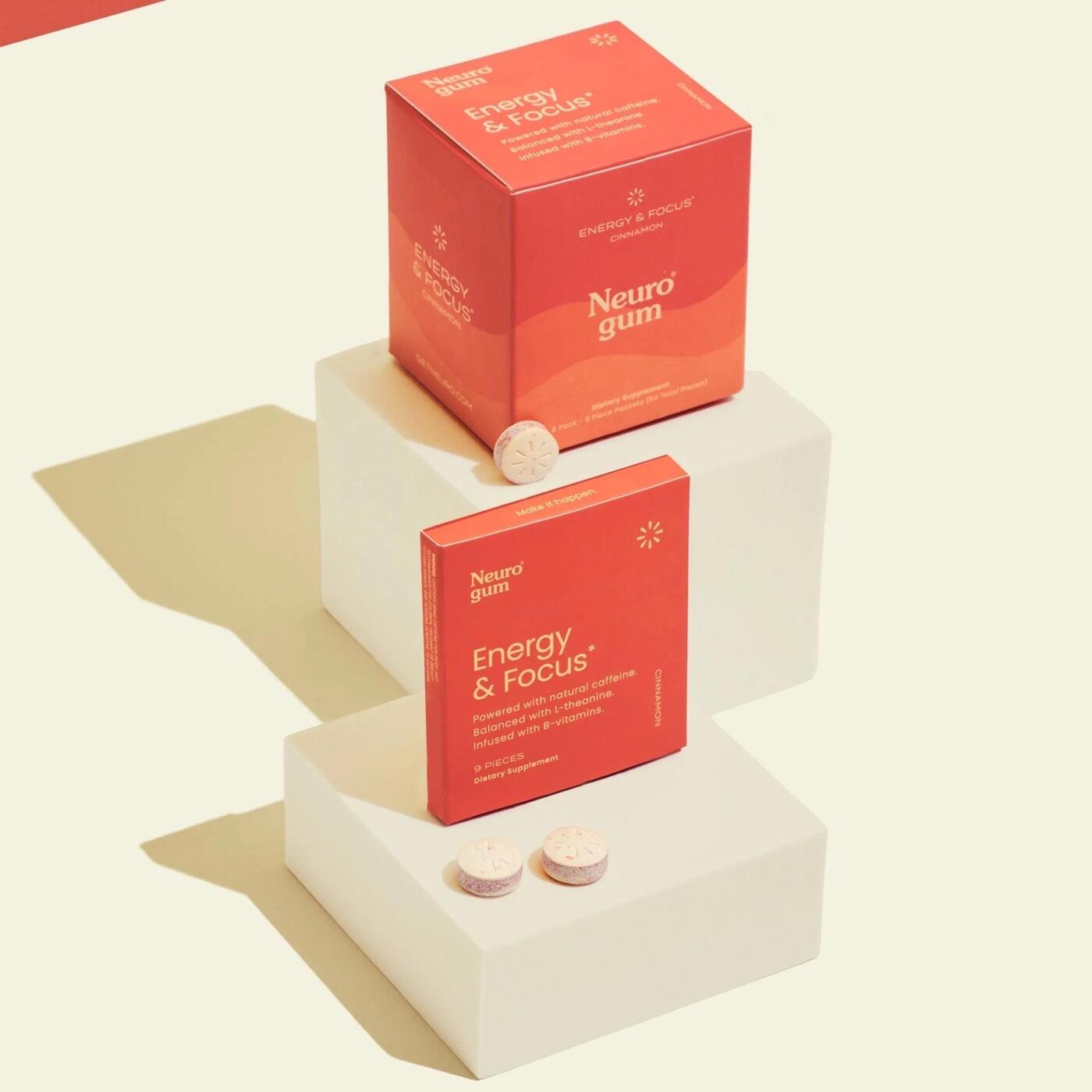
Neuro Cinnamon
Neuro Energy & Focus: Cinnamon Gums and Mints for Steady Alertness
In a market saturated with energy drinks, pre-workout powders, and high-dose caffeine pills, Neuro Europe has carved out a distinctive niche with a deceptively simple proposition: what if your daily cognitive support came in the form of a refreshing gum or mint? Neuro Energy & Focus represents a growing category of “smart” nootropic supplements — products engineered not just to stimulate, but to do so with precision and restraint. The core idea is elegant in its simplicity. Each piece delivers 40mg of natural caffeine alongside L-theanine, an amino acid celebrated for its calming yet alerting properties, creating what Neuro describes as “smooth, balanced energy” without the jitters, anxiety, or inevitable crash associated with conventional stimulants. This document explores the formula, the science, the formats, and the practical guidance behind Neuro’s flagship cognitive support products.
Energy & FocusCinnamon FlavourGums & Mints
The Promise: Smooth, Balanced Energy Without the Rollercoaster
Neuro positions its Energy & Focus gum and mints as a fundamentally smarter approach to caffeine delivery. The central claim is not simply that these products provide energy — virtually any caffeinated product can do that — but that they provide it in a qualitatively different way. Where a typical energy drink might deliver 80mg to 300mg of caffeine in a single rapid bolus, often accompanied by sugar, artificial stimulants, and a laundry list of proprietary blends, Neuro’s approach is measured and deliberate. Each piece contains 40mg of natural caffeine, a dose calibrated to provide a meaningful lift without overwhelming the nervous system.
Paired with this caffeine is L-theanine, an amino acid most commonly associated with green tea. The combination is not arbitrary. Research into caffeine and L-theanine co-administration has consistently suggested that the two compounds work synergistically — caffeine provides the alerting stimulus while L-theanine modulates the experience, reducing the physiological stress response that caffeine alone can trigger. Neuro frames this pairing as the foundation of what they call “smooth, balanced energy”: a state of alertness that feels usable and sustainable rather than frantic and fleeting.
The language Neuro uses throughout its product communications is revealing. Words like “steady,” “clear,” and “anytime, anywhere” recur consistently, suggesting a product designed for integration into everyday life rather than reserved for extreme performance scenarios. This is not a pre-workout supplement marketed to athletes pushing physical limits. It is a cognitive support tool pitched at professionals, students, and anyone seeking reliable mental endurance throughout a demanding day. The implication is that the product should feel like a natural extension of your routine, not a chemical intervention you need to recover from.
The avoidance of jitters and crashes is perhaps the most significant differentiator Neuro emphasises. For many caffeine consumers, the experience is a familiar and unwelcome cycle: a sharp spike in energy and focus followed by a pronounced dip that leaves you more fatigued than before you started. This crash is driven by several mechanisms — rapid absorption leading to a peak-and-trough blood concentration curve, adenosine receptor rebound, and the physiological stress of elevated cortisol and adrenaline. By moderating the caffeine dose and pairing it with L-theanine, Neuro aims to flatten this curve, producing a gentler ascent and a more gradual descent. The result, they claim, is energy you can actually use — sustained, clear, and without the anxiety that often accompanies higher-dose stimulant products.
It is also worth noting what Neuro does not promise. There are no claims of superhuman productivity, no guarantees of eight-hour focus marathons, and no suggestions that these products replace sleep or proper nutrition. The framing is consistently one of support and enhancement — a tool to help you perform at your best during the hours when you need it most, not a substitute for the fundamentals of cognitive health. This measured positioning reflects a broader trend in the nootropic market towards evidence-informed, responsibly dosed products that prioritise user experience over marketing hyperbole.
40mg Natural Caffeine
A calibrated dose designed for meaningful lift without overwhelming the nervous system
L-Theanine
An amino acid that modulates caffeine’s effects, reducing jitters and anxiety
No Crash
Synergistic formula designed to avoid the sharp energy dip common with conventional stimulants
The Core Formula: What You’re Actually Taking Per Piece
Understanding exactly what goes into each Neuro Energy & Focus piece is essential for making an informed decision about whether the product suits your needs. The formula is deliberately transparent and relatively straightforward, which is refreshing in a supplement market often characterised by proprietary blends and vague ingredient lists. Neuro lists its active ingredients clearly, allowing consumers to evaluate the product on its actual merits rather than marketing language alone. Here is a breakdown of the key components you will find in every gum or mint.
| Ingredient | Amount Per Piece | Primary Function |
| Natural Caffeine | 40mg | Central nervous system stimulant; increases alertness and reduces perceived fatigue |
| L-Theanine | Not specified by mass | Amino acid that promotes relaxed alertness; modulates caffeine’s stimulant effects |
| Vitamin B6 | Not specified by mass | Supports neurotransmitter synthesis and energy metabolism |
| Vitamin B12 | 100% Daily Value | Essential for red blood cell formation, nerve function, and cognitive health |
The 40mg caffeine content per piece is a deliberate choice that reflects Neuro’s understanding of dose-response relationships in cognitive enhancement. At 40mg, the dose is substantial enough to produce noticeable effects in most caffeine-sensitive individuals, yet conservative enough to allow flexible dosing throughout the day. For context, a standard cup of brewed coffee typically contains between 80mg and 120mg of caffeine, meaning each Neuro piece delivers roughly one-third to one-half of that amount. This allows users to titrate their intake precisely — one piece for a gentle lift, two for a more pronounced effect — without risking the overconsumption that can occur with less precisely dosed products.
L-theanine’s presence in the formula is arguably the most significant differentiator. This amino acid, found naturally in Camellia sinensis (tea plant), has been studied extensively for its ability to promote alpha brain wave activity — a state associated with relaxed alertness. When combined with caffeine, L-theanine appears to attenuate the anxiety and cardiovascular stimulation that caffeine alone can produce, while preserving or even enhancing its cognitive benefits. Several peer-reviewed studies have examined this combination, with findings generally supporting improved attention, faster reaction times, and reduced subjective stress compared to caffeine alone. Neuro’s inclusion of L-theanine reflects an evidence-informed approach to formulation that goes beyond simple stimulation.
The addition of Vitamin B6 and Vitamin B12 adds another dimension to the formula’s rationale. Both B vitamins play critical roles in neurological function and energy metabolism. Vitamin B6 is a cofactor in the synthesis of neurotransmitters including serotonin, dopamine, and GABA — chemicals directly involved in mood regulation, motivation, and cognitive processing. Vitamin B12, which Neuro claims to provide at 100% of the daily value per piece, is essential for myelin sheath integrity, red blood cell production, and homocysteine metabolism. Deficiency in B12 is associated with cognitive decline, fatigue, and impaired concentration, making its inclusion in a focus-oriented supplement both logical and potentially meaningful for individuals with suboptimal B12 status.
It is worth acknowledging what the formula does not include. There are no synthetic stimulants such as synephrine or DMAA, no excessive sugar alcohols marketed as “zero calorie” solutions, and no proprietary blends that obscure actual ingredient quantities. The formula’s relative simplicity is a feature, not a limitation — it allows each component to be evaluated on its own merits and gives consumers confidence that they understand precisely what they are consuming. In a supplement landscape where complexity is often confused with sophistication, Neuro’s transparent approach stands out as both honest and practical.
Caffeine Per Piece
Natural caffeine calibrated for smooth, usable energy
Daily B12 Value
Full daily value of Vitamin B12 per piece, supporting nerve and cognitive function
Key Actives
Caffeine and L-theanine working in concert for balanced cognitive support
Why L-Theanine Changes the Caffeine Story
To understand why Neuro’s formula works differently from a standard cup of coffee or an energy drink, it helps to understand what L-theanine actually does in the brain. Caffeine, on its own, is a remarkably effective stimulant. It works primarily by blocking adenosine receptors — adenosine being a neurotransmitter that accumulates throughout the day and signals fatigue. When caffeine occupies these receptors, the brain does not receive the “you are tired” signal, and alertness increases. This mechanism is well understood and reliably effective, but it comes with a cost. The blockade of adenosine receptors also triggers a cascade of secondary effects: increased heart rate, elevated blood pressure, heightened cortisol, and in many individuals, a sense of nervous energy that feels more like anxiety than productive focus.
L-theanine enters this picture as a modulator rather than a counteragent. It does not cancel out caffeine’s effects; instead, it refines them. L-theanine crosses the blood-brain barrier relatively easily and has been shown to increase alpha brain wave activity — the neural signature of a state that is simultaneously relaxed and alert. This is the same state that experienced meditators achieve, and it is the state that many people seek when they reach for caffeine but do not always attain. By promoting alpha wave activity, L-theanine creates a neurological environment in which caffeine’s alerting effects can operate without the accompanying physiological stress response.
Caffeine Alone
Blocks adenosine receptors, increases alertness, but can trigger anxiety, elevated heart rate, jitters, and a pronounced energy crash as adenosine rebounds
Caffeine + L-Theanine
Same alerting effect, but L-theanine promotes alpha brain waves, reduces cortisol response, and smooths the experience — producing what Neuro calls “clear focus you can use anytime, anywhere”
The research literature on this combination is more robust than many supplement claims can support. Multiple randomised controlled trials have examined caffeine and L-theanine co-administration, with consistent findings across studies. Participants typically report improved attention, faster reaction times, and reduced subjective mental fatigue compared to placebo. Importantly, several studies have directly compared caffeine alone to caffeine plus L-theanine, finding that the combination produces superior cognitive outcomes with fewer adverse effects. One frequently cited study published in Biological Psychology found that the combination improved speed and accuracy on attention-switching tasks more effectively than either compound alone. Another study demonstrated reduced blood pressure response to cognitive stress in participants taking the combination versus caffeine alone.
Neuro’s framing of L-theanine as the “smoother partner” to caffeine is therefore grounded in genuine scientific rationale. The phrase “smooth sharp edges without dulling lift” captures the mechanism accurately — L-theanine does not reduce caffeine’s efficacy; it reduces its collateral damage. The result is a cognitive state that feels more controlled and intentional, one where alertness is accompanied by calm rather than agitation. For individuals who are sensitive to caffeine, or for those who have historically avoided stimulants due to unpleasant side effects, this combination can be genuinely transformative. It opens the door to caffeine’s cognitive benefits for a wider range of people than high-dose stimulant products ever could.
The practical implication for Neuro’s users is significant. A product that delivers its effects without triggering anxiety or a crash is a product that can be used consistently and confidently. There is no need to “build up” tolerance to the unpleasant side effects, no need to time consumption around a recovery period, and no need to worry about the social or professional consequences of visible stimulant effects. Neuro’s claim that this is energy you can use “anytime, anywhere” is not merely marketing language — it reflects the genuine pharmacological profile of the caffeine-L-theanine combination and its suitability for integration into everyday life.
This three-stage interaction illustrates why the caffeine-L-theanine pairing produces a qualitatively different experience from caffeine alone — each step builds on the last to create the smooth, sustained focus that Neuro promises.
Gum vs Mints: The Same Intent, Different Routines
Neuro Energy & Focus is available in two formats — chewing gum and mints — and while the core formula is identical in both, the choice between them is far from trivial. The format you choose will shape how the product fits into your daily routine, how discreetly you can use it, and even how quickly you experience its effects. Understanding the practical differences between the two formats helps ensure you select the option that best aligns with your lifestyle and usage patterns.
Energy & Focus Gum
The gum format offers a slower, more extended release profile. Chewing stimulates saliva production and extends the time the active ingredients are in contact with the oral mucosa, potentially leading to a more gradual onset of effects. Gum is ideal for situations where you have a longer window of focus ahead — a study session, a lengthy meeting, or a sustained work block. The act of chewing itself may also provide a mild sensory anchor that some users find helpful for maintaining concentration. Gum is best suited to environments where chewing is socially acceptable and where you have the space to carry a small pack.
Energy & Focus Mints
The mint format prioritises speed and discretion. Mints dissolve quickly, delivering their active ingredients rapidly through both ingestion and sublingual absorption. This makes them well-suited to moments when you need a quicker onset of effects — before a presentation, during a commute, or at any point when you need to sharpen your focus rapidly. Mints are also more discreet in professional or formal settings where chewing gum might be inappropriate. The compact packaging fits easily into a pocket, wallet, or bag, making mints the go-to choice for truly on-the-go use.
Both formats share the same fundamental promise: pocket-friendly cognitive support that shows up when you need it most. Neuro has clearly designed both products with portability and convenience in mind. The packaging for both gum and mints is compact enough to carry without inconvenience, and the sugar-free formulation means they can be used frequently without concern for dental health or unnecessary calorie intake. This sugar-free positioning is particularly relevant for health-conscious consumers who want cognitive support without compromising their broader wellness goals.
The Peppermint Cinnamon flavour, available in both formats, deserves specific mention. Cinnamon has a naturally warming, slightly sweet profile that pairs surprisingly well with the cooling sensation of peppermint. The combination creates a sensory experience that is both refreshing and subtly stimulating — the kind of flavour that feels appropriate for a product designed to enhance alertness. Flavour matters more than it might initially seem in a product you consume regularly. A taste you enjoy encourages consistent use; a taste you tolerate reluctantly becomes a chore. Neuro’s flavour choice reflects an understanding that the sensory experience of a supplement is part of its overall value proposition.
From a practical standpoint, the availability of two formats also allows users to match the product to the context. You might keep mints in your pocket for spontaneous use throughout the day while keeping gum at your desk for planned focus sessions. This flexibility is a genuine advantage over single-format products, and it reflects Neuro’s commitment to meeting users where they are rather than asking them to adapt their routines to the product. Whether you reach for a gum or a mint, the underlying formula remains the same — 40mg caffeine, L-theanine, and B vitamins working together to deliver the smooth, sustained focus that defines the Neuro Energy & Focus experience.
The BrainCo Pilot Study: Focus “Better and Faster”
When Neuro Europe references its “BrainCo pilot study,” it is making a specific and meaningful claim about the product’s real-world effectiveness. Pilot studies occupy an important space in the research landscape — they are not the gold-standard randomised controlled trials that regulatory bodies require for pharmaceutical claims, but they are also far more substantive than anecdotal testimonials or uncontrolled user surveys. A pilot study conducted by a dedicated research team implies a structured methodology, defined outcome measures, and a level of scientific rigour that goes beyond marketing conjecture.
According to Neuro Europe’s communications, the BrainCo research team tested Energy & Focus and reported that participants “focused better and faster.” While the full methodology and data from this pilot study are not published in peer-reviewed literature (as is common with proprietary industry research), the claim itself aligns with what the broader scientific literature would predict based on the formula’s ingredients. The caffeine-L-theanine combination has been studied extensively in independent academic settings, and the consensus across multiple trials is that it does indeed improve measures of attention, processing speed, and task accuracy compared to placebo and, in some studies, compared to caffeine alone.
What the Research Suggests
Independent studies on caffeine plus L-theanine have consistently demonstrated improvements in:
- Speed and accuracy on attention-switching tasks
- Reduced mental fatigue during sustained cognitive work
- Faster reaction times in cognitively demanding situations
- Lower subjective stress during performance tasks
- Improved performance on serial subtraction and memory tasks
Neuro’s BrainCo Claim
Neuro Europe’s internal pilot study reportedly found that Energy & Focus users demonstrated measurably better and faster focus — a finding consistent with the broader scientific literature on caffeine-L-theanine combinations
The phrase “better and faster” is worth unpacking. “Better” focus typically refers to accuracy and depth of attention — the ability to maintain concentration on a task without distraction, to process information more thoroughly, and to produce higher-quality output. “Faster” focus suggests reduced time-to-onset — how quickly the product’s effects are felt after consumption — as well as improved processing speed, the rate at which the brain can take in and respond to information. Both dimensions are relevant for the product’s target use cases, whether that is studying for an exam, preparing for a presentation, or sustaining productivity through a long workday.
It is important to contextualise what a pilot study can and cannot tell us. Pilot studies are typically smaller in scale than full clinical trials, and they are often designed to establish whether a product shows promise worthy of further investigation rather than to provide definitive proof of efficacy. Neuro’s use of the BrainCo study as a proof-point is appropriate within this context — it signals that the product has been subjected to some level of structured evaluation, and that the results were positive. It does not, however, constitute the kind of robust, independently replicated evidence that would be required for medical claims. Consumers should view the BrainCo findings as encouraging and consistent with existing science, rather than as conclusive proof.
What makes Neuro’s approach noteworthy is not the existence of the pilot study itself — many supplement companies conduct internal research — but the transparency with which Neuro references it. By naming the research team (BrainCo) and describing the general findings without overstating them, Neuro strikes a balance between providing evidence and avoiding the hyperbolic claims that characterise less credible brands in the nootropic space. The claim that people “focused better and faster” is specific enough to be meaningful but measured enough to be defensible. For consumers evaluating whether Neuro Energy & Focus is worth trying, the BrainCo pilot study adds a layer of credibility that purely anecdotal marketing cannot provide, even if it should be weighed alongside the broader independent literature on the formula’s key ingredients.
The Cinnamon Flavour Fit: Refreshment Built Into Focus
Flavour is often treated as an afterthought in the supplement industry, a cosmetic consideration secondary to the “serious” business of ingredient lists and dosages. Neuro Europe appears to understand that this is a mistake. When a product is designed for regular, potentially daily use, the sensory experience of consuming it becomes a significant factor in adherence and satisfaction. A supplement that tastes unpleasant is a supplement that people stop taking. Neuro’s Peppermint Cinnamon flavour — available in both gum and mint formats — reflects a deliberate and considered approach to flavour design that goes beyond mere palatability.
Cinnamon, as a flavour profile, carries several associations that are particularly well-suited to a cognitive support product. It is warming without being heavy, subtly sweet without being cloying, and carries a mild natural spiciness that can feel subtly stimulating in its own right. Some research has even suggested that the aroma of cinnamon may have mild cognitive-enhancing properties, with studies linking cinnamon scent to improved attention and processing speed — though these findings are preliminary and should not be overstated. Whether or not the aroma contributes meaningfully to the product’s effects, the flavour profile creates a sensory experience that feels appropriate for a product designed to enhance alertness and focus.
The addition of peppermint to the cinnamon base creates a layered flavour experience. Peppermint’s cooling menthol sensation provides an immediate refreshment that contrasts with cinnamon’s warmth, creating a dynamic taste profile that evolves as the gum is chewed or the mint dissolves. This contrast is not merely pleasurable — it is functionally relevant. The cooling sensation of menthol has been associated with increased alertness in its own right, with some studies suggesting that menthol can enhance cognitive performance independently of caffeine. The combination of cinnamon and peppermint in Neuro’s formula thus creates a multi-sensory experience that supports the product’s core promise from multiple angles.
Neuro’s positioning of its gum and mints as a sugar-free alternative to drinks or “handfuls of pills” is a significant rhetorical move. It acknowledges the two dominant paradigms of caffeine consumption — beverages and tablets — and positions Neuro’s format as superior to both. Energy drinks and coffees, while effective, come with drawbacks: liquid volume, potential sugar content, staining, and the social awkwardness of consuming a beverage in certain professional settings. Pills and capsules, meanwhile, require water, feel clinical, and lack any sensory pleasure. A gum or mint sidesteps all of these issues. It is dry, discreet, sugar-free, and genuinely pleasant to consume. For individuals seeking mental endurance support that integrates seamlessly into their day, this format advantage is substantial.
Sugar-Free Formulation
Both gum and mint formats are sugar-free, supporting dental health and avoiding unnecessary calorie intake — important for a product designed for regular daily use
Peppermint Cinnamon Flavour
A layered flavour profile combining cinnamon’s warming spice with peppermint’s cooling refreshment, creating a sensory experience that complements the product’s alertness-enhancing purpose
Format Advantage Over Alternatives
Gums and mints offer discretion, portability, and sensory pleasure that energy drinks and pills cannot match — making consistent daily use more likely and more enjoyable
How to Use It Responsibly: Dosing and the “Too Much Caffeine” Reality
Responsible supplementation requires honest engagement with dosage guidelines, and Neuro Europe’s guidance on caffeine consumption is refreshingly straightforward. The company states that up to 400mg of caffeine per day is considered safe for most healthy adults — a figure that aligns with recommendations from major health authorities including the European Food Safety Authority (EFSA) and the US Food and Drug Administration (FDA). At 40mg per piece, this equates to a maximum of approximately 10 pieces per day, though Neuro’s actual usage recommendation is considerably more conservative and, in practice, more sensible.
Neuro recommends taking 1 to 2 pieces “as needed” — language that is both practical and responsible. “As needed” implies situational use rather than scheduled consumption, suggesting that the product should be deployed strategically at moments when cognitive support is genuinely required rather than taken reflexively as a daily habit. This approach has several advantages. It reduces the risk of developing tolerance to caffeine’s effects, it encourages users to be intentional about when and why they are seeking cognitive enhancement, and it naturally limits total daily caffeine intake to well within safe parameters for the vast majority of users.
Neuro’s Recommended Dosing
- 1–2 pieces per occasion, taken as needed
- Maximum 400mg caffeine per day (approximately 10 pieces)
- Avoid consumption close to bedtime
- Stay hydrated when using the product
Understanding 400mg in Context
To put Neuro’s 400mg daily limit in perspective:
- ~4 cups of brewed coffee
- ~2–3 standard energy drinks
- ~10 Neuro Energy & Focus pieces
- EFSA and FDA safe daily limit for healthy adults
Most users will find 1–3 pieces per day sufficient for their needs.
The concept of “too much caffeine” is worth addressing directly, because it is a genuine concern for any caffeine-containing product. Caffeine sensitivity varies enormously between individuals. Some people can consume 400mg with no adverse effects; others experience anxiety, palpitations, or digestive discomfort at doses as low as 100mg. Factors influencing sensitivity include genetics (particularly variations in the CYP1A2 gene, which governs caffeine metabolism), habitual caffeine consumption, body weight, and concurrent medication use. Neuro’s conservative dosing recommendation of 1–2 pieces as needed is appropriate precisely because it allows individuals to find their personal optimal dose without risking overconsumption.
The side effects of excessive caffeine intake are well documented and worth understanding. At high doses, caffeine can cause anxiety, restlessness, insomnia, rapid heartbeat, gastrointestinal distress, and in extreme cases, more serious cardiovascular effects. These are not common at moderate doses, but they are a genuine risk for individuals who consume caffeine indiscriminately or who are particularly sensitive to its effects. Neuro’s guidance to stay within the 400mg daily limit and to use the product “as needed” rather than habitually is a responsible framework that, if followed, will keep the vast majority of users well within a safe and comfortable range.
Hydration is another consideration that Neuro appropriately highlights. Caffeine has mild diuretic properties, meaning it can increase urine production and potentially contribute to dehydration if fluid intake is not maintained. This effect is generally modest at moderate caffeine doses, but it is a genuine consideration for anyone using caffeine-containing products regularly. The recommendation to drink water alongside Neuro Energy & Focus is simple, practical advice that supports both the product’s effectiveness and the user’s overall wellbeing. Staying hydrated is good cognitive practice in its own right — even mild dehydration can impair concentration and mental performance, so adequate water intake complements the product’s focus-enhancing purpose rather than merely mitigating a side effect.
If you are pregnant, nursing, taking medication, or have a pre-existing medical condition, consult a healthcare professional before using any caffeine-containing supplement. Individual caffeine tolerance varies significantly.
Timing Matters: Using Neuro Energy & Focus for the Right Part of Your Day
When you take Neuro Energy & Focus is almost as important as how much you take. Caffeine’s effects on sleep are well established and, for many people, surprisingly long-lasting. The half-life of caffeine — the time it takes for your body to metabolise half of the caffeine you have consumed — typically ranges from three to seven hours in healthy adults, though this varies considerably based on genetics, age, liver function, and other factors. What this means in practical terms is that caffeine consumed in the late afternoon can still be active in your system at bedtime, potentially disrupting sleep quality even if you do not consciously feel “wired” or unable to fall asleep.
Neuro’s retail guidance explicitly advises avoiding consumption close to bedtime, and this is sound advice worth taking seriously. Sleep is the foundation of cognitive performance. No supplement, however well-formulated, can compensate for chronically poor sleep. In fact, using caffeine to mask sleep deprivation creates a vicious cycle: poor sleep leads to fatigue, fatigue leads to caffeine consumption, caffeine disrupts sleep, and the cycle continues. By recommending that users time their Neuro Energy & Focus consumption earlier in the day, the company is acknowledging this reality and encouraging a sustainable approach to cognitive support that does not come at the expense of restorative sleep.
Morning (7am–10am)
Ideal for establishing baseline alertness. One piece can complement your natural cortisol awakening response without overstimulating
Midday (11am–2pm)
Useful for combating the post-lunch dip in alertness. Particularly effective before meetings or tasks requiring sustained concentration
Afternoon (3pm–5pm)
Can help sustain productivity through the end of a workday. Avoid after 5pm if you are sensitive to caffeine’s sleep-disrupting effects
Evening (After 6pm)
Generally not recommended. Caffeine consumed this late can disrupt sleep architecture even if you do not feel its stimulating effects
iHerb’s description of Neuro Energy & Focus as a supplement for “energy and focus, including occasional mental endurance” is a useful framing that deserves emphasis. The word “occasional” is doing important work here. This product is positioned not as a daily necessity but as a situational tool — something you reach for when your cognitive demands exceed your natural baseline, not something you rely on to function at all. This distinction matters for both effectiveness and safety. Using caffeine strategically for genuinely demanding periods preserves its effectiveness (by reducing tolerance development) and keeps total consumption within a healthy range.
The relationship between hydration and timing also deserves consideration. If you are using Neuro Energy & Focus during a period of sustained cognitive work — a long study session, an extended work project, a demanding exam — maintaining adequate hydration throughout that period is essential. Water intake supports cognitive function independently of caffeine, and the mild diuretic effect of caffeine makes conscious hydration even more important. A practical approach is to drink a glass of water alongside each piece of gum or mint, ensuring that the cognitive benefits of the product are not undermined by the subtle cognitive impairment that even mild dehydration can cause.
For individuals with irregular schedules — shift workers, parents of young children, students with variable timetables — the principle remains the same even if the specific timing shifts: allow a sufficient buffer between your last piece of Neuro Energy & Focus and your intended sleep time. For most people, a minimum of six hours is a reasonable guideline, though those who are particularly caffeine-sensitive may need eight or more. Listening to your own body’s response is ultimately the most reliable guide. If you find that afternoon consumption is affecting your sleep, move your last piece earlier. If morning consumption feels excessive, try using the product only when genuinely needed. The flexibility of the 1–2 pieces “as needed” dosing model supports this kind of individualised, responsive approach to timing.
Final Take: A Gum or Mint for Steady Attention, Not an Energy-Drink Rollercoaster
Neuro Energy & Focus occupies a genuinely interesting space in the cognitive enhancement market. It is not trying to be the most potent stimulant available, nor is it making extravagant claims about transforming your brain into a supercomputer. What it offers is something more nuanced and, for many people, more valuable: a reliable, well-tolerated, and precisely dosed tool for achieving the kind of steady, clear-headed focus that supports real-world performance without the physiological cost of conventional stimulants. The caffeine-L-theanine combination at the heart of the formula is one of the most evidence-supported pairings in the nootropic space, and Neuro’s execution — 40mg per piece, available in two convenient formats, with added B vitamin support — reflects a thoughtful approach to formulation.
The gum and mint formats are a genuine innovation in how cognitive support products are delivered. They solve real problems that beverages and pills do not: portability without liquid, discretion without clinical feel, and sensory pleasure without sugar. The Peppermint Cinnamon flavour is well-chosen, creating a refreshing experience that feels appropriate for a product designed to enhance alertness. The sugar-free formulation means the product can be used regularly without concern for dental health or unnecessary calorie intake — a consideration that matters for a product positioned for everyday use rather than occasional extreme performance scenarios.
40mg Caffeine + L-Theanine
The evidence-backed pairing that delivers alertness without anxiety
Two Convenient Formats
Gum for extended sessions, mints for rapid discreet use
Responsible Dosing
1–2 pieces as needed, within the 400mg daily caffeine guideline
Smart Timing
Use earlier in the day to protect sleep and maintain effectiveness
Who is this product for? Based on its formulation, positioning, and guidance, Neuro Energy & Focus appears ideally suited to professionals seeking reliable cognitive support during demanding work periods, students looking for an edge during study sessions, and anyone who wants caffeine’s benefits without the anxiety and crash that higher-dose products can produce. It is particularly appropriate for individuals who are caffeine-sensitive or who have historically found energy drinks and strong coffee unpleasant or counterproductive. The conservative dosing model and the “as needed” usage guidance make it accessible to a wider range of people than products designed for maximum stimulation.
Who might it not suit? Individuals seeking a powerful stimulant effect for extreme physical or cognitive performance may find 40mg per piece insufficient for their needs. Those who are completely caffeine-naive should start with a single piece and assess their tolerance before increasing consumption. And anyone with caffeine sensitivity, cardiovascular conditions, or who is pregnant or nursing should consult a healthcare professional before use — standard advice for any caffeine-containing product, but worth reiterating.
The practical guidance that emerges from this analysis is straightforward. Use 1 to 2 pieces as needed during the earlier parts of your day. Keep your total daily caffeine intake — from all sources, not just Neuro — within the 400mg guideline that major health authorities recommend. Stay hydrated. And treat Neuro Energy & Focus as what it is: a well-designed tool for supporting your cognitive performance when you need it, not a substitute for the sleep, nutrition, and lifestyle habits that form the true foundation of mental sharpness. If you want caffeine’s lift with a smoother, more sustained curve, Neuro Energy & Focus — in gum or mint form — delivers exactly that, in a format that fits naturally into the rhythm of a demanding day.
Neuro Energy & Focus is built around a simple but powerful idea: 40mg caffeine plus L-theanine per piece, offered as both gums and mints, designed for the person who wants to perform at their best without paying for it later.