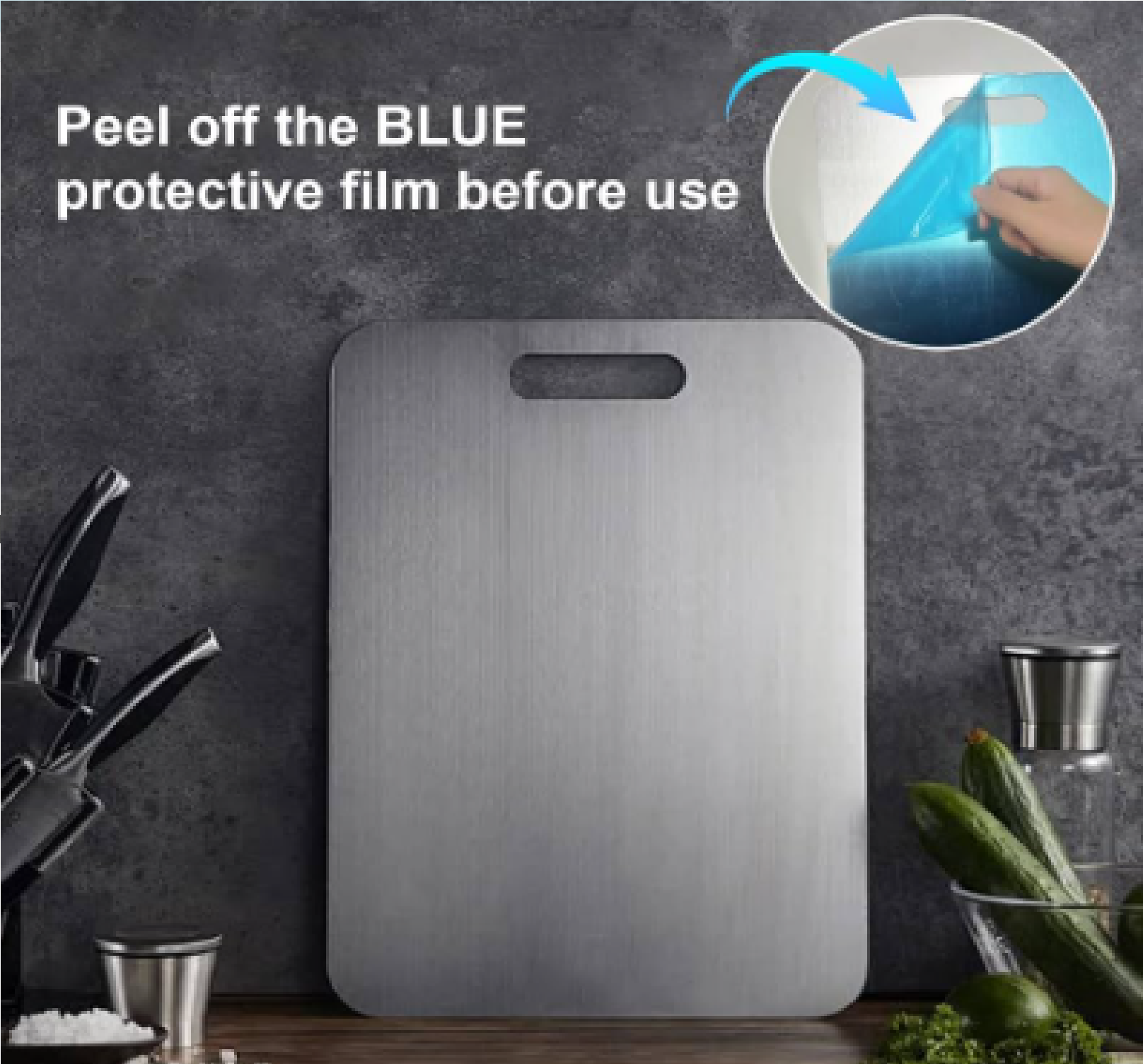
Katori Titanium Cutting Board The Modern Kitchen Essential Designed for Everyday Food Preparation
“The Truth” About the Katori Titanium Cutting Board A Gear Enthusiast’s Verdict
ORDER NOW & SAVE 70% OFF
What This Deck Covers
- Material claims vs. independent test results
- BESS-certified knife dulling data — the centerpiece
- Hygiene science vs. marketing copy
- Noise, ergonomics & daily-use reality
- Head-to-head competitor comparison
- Who should (and shouldn’t) buy
Why This Review Exists
The Katori Titanium Cutting Board markets itself with aggressive superlatives — “America’s #1 Rated,” “surgical-grade,” “knife-friendly.” For gear enthusiasts who invest in premium knives and kitchen tools, those claims deserve scrutiny.
This deck is a critical but fair assessment. It acknowledges the board’s genuine strengths — and there are real ones — while holding the marketing to account with the most rigorous independent testing data available.
All knife-dulling data is from BESS-certified independent testing (Prudent Reviews, 700+ products). All noise data from decibel-meter controlled testing.
The Hype Machine: What Katori Claims vs. What You’re Actually Buying
The Marketing Claims
“America’s #1 Rated Titanium Cutting Board” — no methodology cited, no third-party verification
“Surgical-grade titanium” — implies medical-level purity; unverified on consumer-grade products
“Bacteria-blocking surface” — partially true; see Card 5 for the nuanced hygiene story
“Knife-friendly design” — directly contradicted by BESS testing (444-point loss; 30× worse than walnut)
Red Flags Worth Flagging
The “70% OFF” Perpetual Sale
Recurring “limited time” discounts of 50–75% are a classic DTC pricing tactic. The “original” price is almost certainly inflated purely to manufacture urgency. Evaluate at the actual market price: ~$40–$60 for a set of 3.
Amazon Review Authenticity: Grade B
387 reviews. Original listing rating: 4.44. After fake-review filtering (~10% estimated fake): adjusted to 4.20. The remaining reviews appear genuine — verified purchases with specific performance details including both positives and negatives.
The “Pure Titanium” Question
A significant percentage of boards sold as “titanium” online are actually stainless steel. Genuine titanium has a density of 4.51 g/cm³ vs. stainless at 7.5–8.0 g/cm³. A real 12×9″ titanium board should weigh ~2–3 lbs. If yours is 4–5 lbs, it’s almost certainly stainless steel — regardless of what the listing says. One verified buyer reported receiving two boards with different brand names, raising further authenticity concerns.
Material & Durability: Where Titanium Actually Delivers
Before getting to the damning knife data, it’s worth being honest: titanium boards have real, verifiable advantages. These aren’t fabricated — they’re just narrower than the marketing implies.
Non-Porous Surface
Zero pores, zero crevices. No place for bacteria, mold, or food residue to hide — a genuine, demonstrable advantage over wood and plastic surfaces.
Virtually Indestructible
After weeks of chopping in independent tests, titanium boards showed almost no visible wear. No warping, no cracking, no deep knife grooves that plague plastic. The board itself won’t fail.
Stain & Odor Resistant
Controlled testing with garlic, beets, and chipotle peppers (20-min soak): zero staining, zero residual odor after a simple soap-and-water wash — outperforming every wood and bamboo board tested.
Zero Microplastics
Unlike polypropylene and HDPE boards, which release measurable microplastics with every cut (Yadav et al., Environmental Science & Technology, 2023), titanium sheds nothing.
Durability Comparison Across Board Materials
| Material | Durability | Maintenance Effort | Knife Friendly | Dishwasher Safe |
| Titanium | Decades | None | Poor | Yes |
| End-Grain Wood | 10–20+ yrs | High (oiling) | Excellent | No |
| Edge-Grain Wood | 5–15 yrs | Medium | Good | No |
| Plastic (PP/HDPE) | 2–5 yrs | Low | Moderate | Yes |
| Bamboo | 3–7 yrs | Low | Moderate | No |
Titanium leads on durability and maintenance — but trails badly on knife safety. The board lasts forever. Your knife edge may not.
The Knife-Killing Elephant in the Room
The Test Methodology
Independent testing by Andrew Palermo (Prudent Reviews), 700+ products tested since 2018 using a BESS-certified sharpness tester — the most rigorous published comparison available on this topic. The protocol: sharpen the same knives to nearly identical BESS readings, then chop standardized volume on each surface, measure the loss.
The Miyabi Confirmation Test
Two brand-new Miyabi SG2 knives (Rockwell 63 — identical steel). One on titanium, one on end-grain walnut. Same steel, same hardness, same test:
| Surface | Before | After |
| Titanium | 205 BESS | 433 BESS |
| End-Grain Walnut | 131 BESS | 168 BESS |
Completely different outcomes from identical steel. The surface material is the variable — nothing else.
Why It Happens
Titanium rates 6.0 on the Mohs scale — harder than most kitchen knives. But hardness alone isn’t the full story. Titanium creates metal-on-metal friction with the steel blade edge. Wood fibers compress and part around the blade; titanium abrades it on every single stroke. Harder Japanese knives suffer micro-chipping; Western knives suffer edge rolling.
Practical cost: Daily titanium use means roughly 2× more frequent sharpening. For a $150–$300 Japanese knife, that’s a real long-term cost — and accelerated blade lifespan reduction Katori’s marketing never mentions.
BESS Sharpness Loss by Board Material
Titanium: 444-point BESS loss — the single worst performer out of every material tested. Nearly 30× worse than end-grain walnut (15 points). The “knife-friendly” claim is not a gray area. It is factually false.
The Hygiene Argument: More Nuanced Than Katori Admits
Where Titanium Hygiene Is Genuinely Superior
Non-porous surface — bacteria cannot penetrate. Ideal for raw meat, fish, and shellfish prep.
Handles boiling water, bleach sanitization, and dishwasher cycles without any surface degradation.
Immunocompromised households or cooks who need aggressive, chemical sanitizing protocols.
Cooks who won’t maintain wood boards properly — unsealed wood can harbor bacteria in deep grooves.
The Science That Complicates the Story
Cliver et al., 1994 (Journal of Food Protection)
The foundational peer-reviewed study on this topic. Researchers inoculated wood and plastic surfaces with E. coli, Listeria, and Salmonella typhimurium. Finding: when bacterial fluids at 10³–10⁴ CFU entered the wood, the bacteria generally could not be recovered. Capillary action pulls bacteria deep into wood grain where they die as the wood dries. Plastic and metal surfaces left bacteria alive and recoverable.
Gutierrez et al., 2023 (MDPI Coatings)
Reinforced the Cliver findings: unfinished wood outperformed both coated wood and non-wood materials on bacterial kill rate. Coatings actually interfere with capillary action — the more “sealed” the surface, the less effectively it kills bacteria.
Where the Hygiene Argument Is Overstated
- General vegetable and bread prep — properly maintained wood is well within safe limits per peer-reviewed science
- The microplastics angle favors both wood andtitanium equally over plastic — it’s not a titanium-specific advantage
- Katori’s hygiene marketing implies wood is inherently dangerous — that framing is not supported by the primary literature
Verdict: Titanium’s hygiene advantage is real, but narrower than the marketing implies. It’s not a slam dunk over well-maintained wood — especially for general-purpose vegetable prep. The advantage is clearest for raw protein and chemical sanitizing use cases.
Noise, Feel & Ergonomics: The Daily Experience Nobody Talks About
Noise Levels by Board Material (dBA)
Titanium at 80.6 dBA vs. Rubber at 59.4 dBA — a 21 dBA gap. That’s a significant perceptual difference. Every chop produces a harsh metallic clank; knife slides create a screeching sound. In an open-plan kitchen or during early-morning/late-night prep sessions, this is genuinely disruptive.
Ergonomic Concerns: The Full Picture
Cutting Feel
The blade strikes solid metal with jarring hardness. No tactile give, no soft feedback. Over long prep sessions this becomes fatiguing — the opposite of a well-seasoned end-grain board.
Slip Hazard
Ultra-thin profile (typically 2–3mm) means the board shifts during aggressive chopping. Most ship with a thin rubber perimeter strip — helpful, but not a complete solution. A towel or non-slip mat underneath is essentially required.
Edge Sharpness
Multiple reviewers and independent testers flagged the thin metal edges as feeling almost sharp in hand — a genuine handling concern, particularly for the Katori set.
Temperature Sensitivity
Pulled from a 38°F refrigerator: uncomfortably cold for 3–4 minutes. Near a stovetop: surface becomes too hot to handle within 2 minutes. Wood boards at the same temperatures feel neutral.
Katori vs. The Competition: How It Stacks Up
Where does the Katori actually land in a field of premium cutting boards? The comparison is more nuanced than the listing would have you believe.
| Board | BESS Loss | Noise | Hygiene | Maintenance | Price |
| Katori Titanium | 444 pts | 80.6 dBA | Excellent | None | ~$40–60 (set of 3) |
| End-Grain Wood (Boos/Teakhaus) | 15 pts | 71.0 dBA | Good | High (oiling) | $80–250 (single) |
| Rubber (Hasegawa) | 10 pts | 59.4 dBA | Excellent | Low | $80–150+ |
| Composite (Richlite/Epicurean) | 117 pts | 74.4 dBA | Excellent | Low | $40–120 |
| Plastic (Polypropylene) | 65 pts | 72.6 dBA | Poor (microplastics) | Low | $10–40 |
| Taima Pure Titanium | ~444 pts | ~80+ dBA | Excellent | None | Varies |
Key Competitive Takeaways
- Rubber (Hasegawa):Rubber is the professional gold standard — 10 BESS loss (best of all materials), quietest board tested, used in professional Japanese kitchens. Katori loses badly on every performance metric except hygiene convenience and price.
- Composite (Richlite/Epicurean):Composite offers 117 BESS loss (vs. 444), is dishwasher safe, non-porous, and doesn’t warp. Arguably the better “low-maintenance” choice than titanium without the knife damage penalty.
Price Context
- Katori set of 3 (S/M/L):~$40–$60 — actually competitive for titanium
- Premium wood boards(Boos, Teakhaus): $80–$250 for a single board
- Hasegawa rubber:$80–$150+ for a single board
- On pure price-per-board, Katori wins — the question is whether the use case justifies the trade-offs
The “Scratch Resistant” Claim: What Amazon Reviewers Actually Found
What the Marketing Says
“Scratch-resistant titanium surface prevents deep marks” — implying the board stays pristine and hygienic over time, connecting surface integrity to the hygiene pitch.
What Verified Buyers Found
Multiple reviewers noted the boards do scratch with heavy use. One 3-star verified review specifically stated “the boards are not scratch resistant” — a direct contradiction of the marketing claim. A second buyer received two boards with different brand names and doubted whether one was truly titanium.
The Physics of the Claim
Titanium is harder than most kitchen knives in bulk form — this part of the claim has a physical basis.
But the thin geometry of a blade edge will fold or micro-chip when struck against solid metal repeatedly. The board may resist deep grooves, but surface scratches will accumulate.
Western knife steel suffers edge rolling on rigid metal surfaces. Harder Japanese-style knives suffer micro-chipping and structural damage to the edge geometry.
Unlike plastic grooves (which trap bacteria in carved channels), titanium scratches are shallower and the non-porous material doesn’t harbor bacteria the same way. Surface wear is less hygienically consequential here than on plastic.
Quality Indicators to Check
- High-quality titanium boards should have a brushed or matte finish— reduces glare, provides traction, shows wear less obviously
- Must be at least 1mm thickto prevent warping and edge flex
- The “100% pure titanium” claim is a positive signal — cheaper boards are often titanium-coatedsteel, which can chip and delaminate
- Well-finished edges (no sharp burrs) and a non-slip base are the minimum QC bar
Who Should (and Shouldn’t) Buy the Katori
Buy It If…
You want a dedicated raw protein board that can be bleached and dishwasher-sanitized after every chicken or fish session — without worry about warping, odor absorption, or degradation.
You prioritize zero maintenance over knife longevity — no oiling, no conditioning, no babying.
You use mid-range knives that you sharpen frequently anyway and aren’t precious about accelerated edge wear.
You have immunocompromised household members who need aggressive chemical sanitizing protocols that would destroy a wood board.
You’re building a two-board system — titanium as the secondary/protein board, quality wood as the primary. This is the most rational use case for any titanium board.
Don’t Buy It If…
You own premium Japanese knives ($150+). The 444-point BESS dulling penalty will meaningfully accelerate sharpening frequency and shorten blade lifespan. This is not a gray area.
You cook in a quiet environment — early morning, late night, open-plan kitchen. The 80.6 dBA metallic clank is genuinely disruptive compared to any wood or rubber alternative.
You expect it to replace a quality wood board for all-purpose use. The cutting feel, noise, and knife damage make it a poor primary board for serious cooks.
Verify before buying: Weigh the board. A genuine 12×9″ titanium board should be ~2–3 lbs. If it’s 4–5 lbs, you almost certainly have stainless steel — regardless of what the listing claims. Titanium density (4.51 g/cm³) vs. stainless steel (7.5–8.0 g/cm³) creates a weight difference that’s detectable in hand.
The Verdict: Real Innovation, Overstated Claims
What’s Genuinely True
- Non-porous, zero microplastics, stain/odor resistant, dishwasher safe, virtually indestructible surface
- Real, verifiable advantages that justify a place in a serious kitchen — just not as the primary board
- Adjusted Amazon rating of 4.20 reflects a product that works for what it actually is— not what it’s marketed as
- Competitive price (~$40–60 for a set of 3) is legitimate value for the specific use case
What’s Marketing Spin
- “Knife-friendly”— directly contradicted by BESS testing (444 loss; 30× worse than walnut). Not a gray area.
- “Scratch-resistant”— partially true in theory, contradicted by verified buyer reports in practice
- “America’s #1 Rated”— no methodology, no third-party verification
- “70% OFF” perpetual sale— a pricing tactic, not a real discount. Evaluate at actual market value.
Final Score by Use Case
Raw Protein / Sanitizing Board
Non-porous, bleachable, odor-free — this is where titanium genuinely earns its place.
All-Purpose Primary Board
Noise, knife damage, and cutting feel make it a poor choice for everyday general-purpose prep.
Wood Board Replacement
Cannot replicate the feel, knife friendliness, or proven antimicrobial properties of quality end-grain wood.
The smarter buy: Pair a Teakhaus or Boos end-grain board (primary) with a Katori or equivalent titanium board (raw protein only). Best of both worlds — without sacrificing your knives.
Bottom Line for Gear Enthusiasts: The Two-Board System Wins
The Recommended Setup
Primary Board: End-Grain Walnut or Teak
Teakhaus or John Boos. Best knife friendliness of any wood (15 BESS loss), quiet, deeply satisfying feel, proven antimicrobial capillary action. Requires oiling every 4–6 weeks — the only maintenance cost.
Secondary Board: Titanium (Katori or Equivalent)
Dedicated to raw meat, fish, shellfish only. Bleach-sanitizable, dishwasher safe, zero odor transfer, zero microplastics. Never use your good knives on it. A beater knife or dedicated protein knife only.
One-Board Option: Rubber (Hasegawa)
The professional’s choice. Best knife friendliness of all materials tested (10 BESS loss), quietest board, dishwasher safe, non-porous. More expensive, but the most complete single-board solution available.
The Gear Enthusiast’s Final Word
Buy the Katori for $40–60 as a dedicated protein board. It does that job well.
Don’t buy it as a primary surface. The knife damage and noise alone disqualify it.
Verify the weight before trusting the “pure titanium” claim. ~2–3 lbs for a 12×9″ board. 4–5 lbs means stainless steel.
Ignore the “70% OFF” countdown timer. The real price is $40–60. That’s the price to evaluate.
The Katori is a well-made, competitively priced titanium board that delivers on hygiene and durability. The “knife-friendly” marketing is false. The perpetual discount is theater. It should never be your only board if you care about your knives.
Sources
Katori Titanium Cutting Board — Product Website
https://store4buyers.com/katori-titanium-cutting-board
Prudent Reviews — Cutting Board Testing (Andrew Palermo)
BESS-certified sharpness testing across 10+ board materials, 700+ products tested since 2018. Primary source for all BESS and noise data cited in this deck.
Cliver, D.O. et al. (1994) — Journal of Food Protection
Peer-reviewed study on bacterial recovery from wood vs. plastic cutting surfaces. The foundational study complicating titanium’s hygiene marketing claims.
Gutierrez, J. et al. (2023) — MDPI Coatings
Reinforced Cliver findings: unfinished wood outperformed coated wood and non-wood materials on bacterial kill rate. Coatings interfere with capillary antibacterial action.
Yadav, S. et al. (2023) — Environmental Science & Technology
Study documenting measurable microplastic release from polypropylene and HDPE cutting boards with normal knife use.
Kitchen Knife Guy (Andrew) — YouTube, 2025
Independent review identifying stainless steel mislabeled as titanium in a popular online cutting board listing, documenting weight and surface behavior discrepancies.
#Katori #TitaniumCuttingBoard #KatoriCuttingBoard #CuttingBoard #TitaniumBoard #KitchenEssentials #KitchenTools #KitchenGadgets #CookingTools #CookingEssentials #HomeKitchen #KitchenAccessories #FoodPrep #MealPrep #ChoppingBoard #KitchenMustHaves #CookingAtHome #SmartKitchen #ModernKitchen #KitchenFinds #HomeEssentials #KitchenUpgrade #FoodPreparation #ChefTools #KitchenInspiration