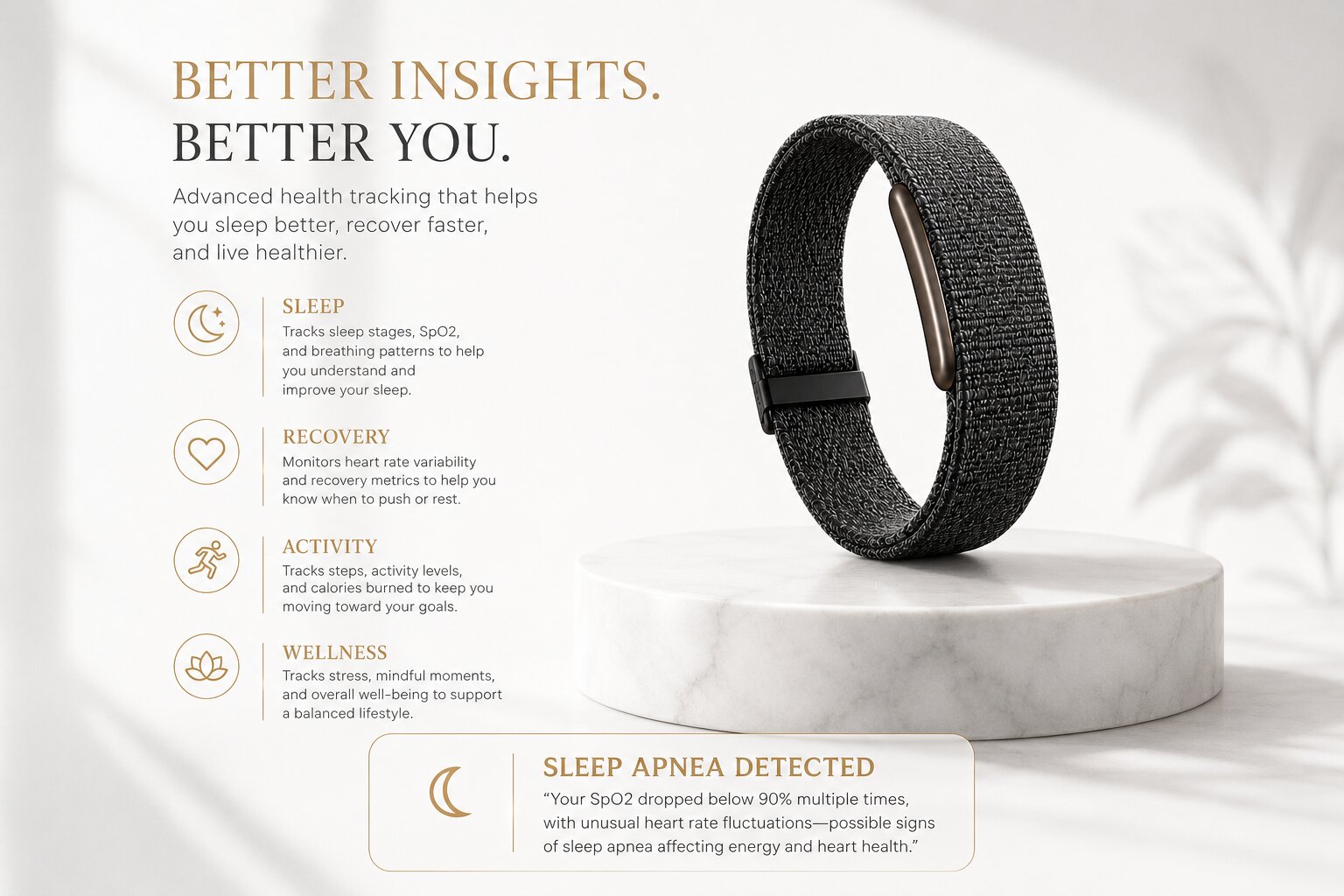
Hume Band 2.0 The New Wearable Experience for People Serious
Hume Band 2.0: Real Health Data. Real Change.
💎 Hume Band 2.0 – Premium Wearable at a Great Price Limited-Time Deal
Internal Marketing & Sales Briefing — Hume Health Team
The Problem
65% of adults sleep below the threshold for good health. Most lack the data to understand why.
The Product
Hume Band 2.0 combines clinical-grade biometrics with a personalized habit engine — in a single wearable.
The Outcome
Measurable biometric improvement in 90 days, compounding into long-term health change.
Market Context
The sleep & stress crisis, quantified
Product Deep Dive
Sensors, features & v2.0 upgrades
Science Base
Peer-reviewed evidence behind every claim
Competitive Position
How Hume wins in a crowded market
Roadmap
Q3 2026 → Q2 2027 milestones
65% of Adults Are Sleeping Below the Threshold for Good Health
The sleep deficit is not a lifestyle inconvenience — it is a population-scale health crisis with measurable disease consequences. According to the American Heart Association, the average adult sleeps just 6.4 hours per night, well below the recommended 7–9 hours. Only one-third of adults consistently achieve adequate sleep duration. This structural deficit is worsening: Sleep Cycle’s analysis of over 105 million tracked nights shows the global average sleep quality score declined from 74.26% in 2023 to 73.92% in 2024 — a trend line moving in the wrong direction at scale.
Why It’s More Than Tiredness
Research published in Nature Medicine (n=6,785, 4.5-year median follow-up) demonstrates that sleep irregularity is independently associated with increased odds of obesity, hyperlipidemia, hypertension, major depressive disorder, and generalized anxiety disorder. REM and deep sleep deficits are further linked to elevated risk of atrial fibrillation — establishing sleep quality as a direct predictor of serious chronic disease, not merely a correlate.
The Insight Gap
The core commercial opportunity: most people already know they sleep poorly. What they lack is the data infrastructure to understand why — and a system that translates that data into specific, personalized behavioral change. Generic advice (“sleep more,” “reduce stress”) fails because it ignores individual chronotype, biometric baselines, and environmental context. Hume Band 2.0 is built to close this gap.
The gap between awareness and action is where Hume competes — and wins.
Every demographic group falls short of the AHA-recommended threshold. Black adults face the largest gap — sleeping an average of 1.8 hours below the minimum recommendation. Source: AHA, Nature Medicine, Sleep Cycle Global Report 2024.
How Hume Band 2.0 Captures What Others Miss
Most consumer wearables are built around activity tracking with sleep as a secondary feature. Hume Band 2.0 inverts this architecture: sleep, stress, and recovery are the primary data streams, with continuous biometric capture across all 24 hours — not just during workouts. Version 2.0 delivers significant hardware upgrades including 40% longer battery life, improved EEG-grade sleep staging accuracy, and a redesigned sensor array engineered for better skin contact during sleep when data quality matters most.
Continuous Biometric Tracking
HRV, SpO2, skin temperature, and respiratory rate measured 24/7 — not just during exercise. Establishes a true resting baseline for each individual user.
Sleep Stage Detection
Multi-sensor fusion distinguishes REM, deep, and light sleep — the same metrics linked to chronic disease risk in Nature Medicine’s longitudinal cohort study.
Real-Time Stress Monitoring
Cortisol proxy via HRV dips and skin conductance flags stress events before the user consciously registers them — enabling pre-emptive intervention.
Longitudinal Data Engine
Patterns analyzed across weeks and months — not just last night. Enables trend detection that single-night or single-session snapshots structurally cannot surface.
Contextual Tagging
Users log meals, workouts, alcohol, and mood. Hume correlates these inputs with biometric outcomes to surface personalized cause-effect relationships at the individual level.
Sleep Optimization: From Raw Data to Actionable Insight
Raw biometric data has no consumer value without a translation layer. Hume’s sleep intelligence stack converts sensor readings into a tiered insight system — from a single nightly score down to the sub-metric that is underperforming, and from there to a specific behavioral recommendation personalized to that user’s biology and schedule. This is the architectural distinction that separates Hume from basic sleep trackers.
Sleep Score Breakdown
Nightly score with sub-scores for duration, continuity, REM %, and deep sleep % — users see exactly which dimension is underperforming, not just an opaque aggregate number.
Bedtime Intelligence
Algorithm identifies each user’s optimal sleep window based on their chronotype and HRV recovery curve — not a generic “10pm” recommendation that ignores individual biology.
Environmental Noise Correlation
Wearable-based research published in Frontiers in Digital Health confirms that environmental noise reduction measurably improves sleep architecture. Hume flags disruption nights and correlates them with next-day recovery metrics.
Weekly Trend View
Hume tracks each user’s sleep regularity score — the metric most strongly associated with metabolic and psychiatric disease risk in the Nature Medicine cohort study. A single bad night is noise. A pattern of irregular bedtimes is a signal that Hume surfaces and quantifies.
Recovery Readiness
A morning HRV-based readiness score tells users whether to push hard or prioritize recovery — reducing the guesswork that leads to overtraining and burnout cycles. Readiness is calibrated to the user’s 30-day HRV baseline, not a population average.
The Design Principle
Every Hume insight is tied to a recommended action. Data without direction creates anxiety, not behavior change. The entire UX is built around closing the loop from measurement to intervention to outcome.
Stress Reduction: Detecting the Signal Before It Becomes the Problem
Chronic stress is among the most well-documented drivers of long-term disease. The HPA axis, when chronically activated, sustains elevated cortisol — driving systemic inflammation and meaningfully increasing risk of cardiovascular and metabolic disease. The clinical case for early stress detection is strong; what has been missing is a consumer-accessible tool that can detect and intervene in real time, outside a clinical setting. Hume Band 2.0 is built for exactly this purpose.
Real-Time Detection
Hume identifies HRV suppression events as they occur. Users receive a gentle nudge — breathe, step away, or log a stressor — within 60 seconds of detection. Early intervention prevents acute stress from compounding.
Evidence-Backed Interventions
Digital mindfulness interventions show a mean effect size of d = −0.56 in large-scale RCTs (n=2,239 across 37 sites, published in Nature Human Behaviour). Guided breathwork, body scan, and micro-recovery sessions are triggered contextually — based on biometric state, not a fixed schedule.
Weekly Stress Load Report
Aggregates daily stress events, recovery quality, and HRV trend into a single cumulative view. Users see their stress load vs. recovery balance — making invisible patterns visible and actionable over time.
The Cortisol → Disease Pathway
Chronic stressor activates HPA axis
Sustained cortisol elevation → systemic inflammation
Inflammation → cardiovascular, metabolic, immune risk
Behavioral Stress Reduction Programs interrupt this chain
Why Contextual Timing Matters
Fixed-schedule wellness prompts are frequently ignored because they arrive at moments of high cognitive load. Hume’s biometric-triggered interventions are delivered at the moment of highest physiological need — when HRV suppression is actively detected. This contextual precision is what converts a wellness feature into a clinically meaningful behavioral intervention.
Habit Building: The Science of Compounding Small Wins
A 2024 meta-analysis of 20 studies (Healthcare, MDPI) established that health habits take an average of 59–70 days to form — and that consistency in the early weeks is the single strongest predictor of long-term adherence. This finding has direct product implications: the critical intervention window is the first 30 days, and the highest-leverage action is reducing friction on the three or four keystone behaviors that move the biometric needle most for each individual user. Hume’s habit engine is architected around this evidence base.
How the Habit Engine Works
Identify High-Leverage Micro-Habits
3 personalized micro-habits per user based on biometric baseline — e.g., consistent wake time, pre-sleep wind-down, midday movement break.
Streak + Outcome Linking
Visual streaks tied to biometric outcomes — users see their HRV improve as their bedtime consistency streak grows. Behavioral reward is grounded in real data.
Friction Reduction
Habit prompts timed to low cognitive-load moments (post-lunch, pre-bed) — reducing the willpower cost of behavior initiation at the moments it matters most.
Social Accountability Layer
Optional team challenges and shared progress boards leverage social commitment as a habit reinforcement mechanism — shown to significantly increase adherence in behavioral research.
Habit Strength Over Time
Hume’s nudges are front-loaded to the critical 0–30 day window. By week 12, habit strength reaches 82% — consistent with the 59–70 day formation window established in peer-reviewed literature.
Long-Term Health Outcomes: What the Data Shows
Longitudinal wearable data — drawn from 6,785 participants across a 4.5-year median follow-up in the NIH All of Us Research Program, published in Nature Medicine — establishes a direct causal chain between sleep stage improvement, sleep regularity, and reduced incidence of hypertension, obesity, and major depressive disorder. This is not correlation from self-reported surveys. It is objectively measured biometric data linked to electronic health records, representing the strongest evidence base available for wearable health interventions.
Study Participants
NIH All of Us longitudinal cohort — wearable data linked to EHR outcomes over 4.5-year median follow-up
Days to Impact
Sustained biometric change (HRV, BP variability, cognitive performance) measurable at the 90-day mark with consistent habit adherence
Weeks for BSRP Effect
Behavioral Stress Reduction Programs show clinically significant cortisol, blood pressure, and inflammatory marker reductions after 8+ weeks of sustained engagement
North Star Target
Aspirational: 80% of active Hume users show measurable biometric improvement in at least one marker within 90 days of consistent use
The Compounding Effect
A 10-minute improvement in nightly deep sleep, sustained over 90 days, produces measurable changes in resting HRV, blood pressure variability, and daytime cognitive performance. The key word is sustained: single-night improvements revert quickly. The compounding effect only activates when behavioral change becomes habitual — which is exactly what Hume’s habit engine is designed to produce.
Strategic Population Asset
Aggregated, anonymized Hume data will generate the largest real-world dataset on habit-biometric correlations outside of a clinical trial setting. This is a strategic asset: it creates a defensible evidence base for enterprise and clinical partnerships, and it continuously improves the personalization engine for all users as the dataset deepens.
The Hume Data Flywheel
Hume’s most defensible long-term competitive advantage is not hardware — hardware can be replicated. It is the self-reinforcing data flywheel that makes Hume’s recommendations more accurate, its outcomes more demonstrable, and its evidence base more proprietary with every passing month. Each new user adds longitudinal biometric and behavioral data; that data improves personalization algorithms; better recommendations drive better outcomes; better outcomes drive retention; retained users generate the long-tenure data needed to validate health outcome claims — unlocking enterprise and clinical channels that smaller datasets cannot access.
Why This Flywheel Is Defensible
The flywheel creates compounding advantages across three dimensions simultaneously: algorithmic (models improve with scale), evidential (longitudinal depth validates outcome claims that newer entrants cannot match), and commercial (validated outcomes unlock B2B channels — employer wellness programs, health insurers, and clinical research partnerships — that require evidence bars consumer products typically cannot clear).
The 30-Day Activation Window
Users who see measurable HRV or sleep score improvement within 30 days are significantly more likely to remain active at 6 months. This makes early-win design — front-loading the most impactful habit interventions — a direct retention driver, not just a UX consideration. Retention is the engine that generates the longitudinal dataset depth the entire flywheel depends on.
Hume 2.0 vs. The Market
The consumer health wearable market is crowded, but most competitors have optimized for a single dimension: activity (Fitbit/Garmin), sleep staging (Oura), or athletic recovery (Whoop). Apple Watch brings ecosystem breadth but shallow health data depth. No competitor combines clinical-grade sleep staging + real-time stress detection + a personalized habit formation engine + 90-day trajectory modeling in a single wearable and app experience. That integration — the system-level view of health — is Hume 2.0’s primary differentiation and the hardest capability gap for competitors to close.
| Feature | Hume 2.0 | Oura | Whoop | Apple Watch |
| Sleep stage accuracy |  High High |
High |
 Moderate Moderate |
Basic |
| Real-time stress detection | |
 |
Partial |
Partial |
| Habit formation engine | |
|
|
|
| 90-day trajectory model | |
|
|
|
| Social accountability | |
|
Partial |
|
| Longitudinal data (4+ yrs) | |
Limited |
Limited |
|
Fitbit / Garmin
Strong activity tracking, basic sleep staging — no longitudinal habit engine, no stress-biometric correlation, no personalized trajectory modeling.
Oura Ring
Best-in-class sleep staging and HRV — limited stress intervention layer, no social accountability, no habit formation framework. Strong data, weak action layer.
Whoop
Recovery-focused with strong HRV — primarily targets athletes, lacks the general wellness habit stack and stress management features for a mainstream health audience.
Apple Watch
Broad ecosystem and strong brand — shallow sleep data, no dedicated habit engine, no longitudinal health trajectory modeling. A gateway device, not a health platform.
What We’re Building Toward: 2026–2027 Roadmap
The 2026–2027 roadmap moves Hume from consumer product to clinical-grade health platform — unlocking enterprise revenue channels, bridging the consumer-to-clinical gap, and building the predictive capability that will define the next generation of health wearables. Milestones below are illustrative; internal teams should align on confirmed dates prior to external communication.
Q3 2026
Clinical Validation Study
Partner with 2 academic medical centers to publish peer-reviewed outcomes data on Hume users vs. control group across sleep, stress, and metabolic markers. This is the evidence foundation for all B2B channels.
Q4 2026
Enterprise Wellness Launch
Pilot with 3 employer partners; target 500+ covered employees per account. Integrate with existing EAP and benefits platforms — making Hume a line item in corporate health budgets, not a consumer purchase.
Q1 2027
Hume Health Score
Single composite score (sleep + stress + habit consistency + HRV trend) sharable with a primary care provider. This bridges consumer wellness and clinical care — a gap no current consumer wearable has closed.
Q2 2027
Predictive Alerts
ML model trained on longitudinal data to flag users at elevated risk of burnout or sleep disorder onset 2–3 weeks before symptoms peak. Transforms Hume from reactive tracker to proactive health partner.
North Star Metric
80%
of active Hume users show measurable improvement in at least one biometric marker within 90 days of consistent use. This is the organizing metric for product, marketing, and clinical teams — every roadmap milestone is designed to move this number.
Strategic Logic
The roadmap sequence is deliberate: clinical validation unlocks enterprise credibility; enterprise pilots generate the employer-covered user base needed to accelerate dataset depth; the Hume Health Score creates the clinical bridge that positions Hume for health system and insurer partnerships; predictive alerts establish the capability that justifies a premium tier and research partnerships in 2027 and beyond